> For the complete documentation index, see [llms.txt](https://doc.aissist.io/llms.txt). Markdown versions of documentation pages are available by appending `.md` to page URLs; this page is available as [Markdown](https://doc.aissist.io/use-cases/service.md).
# Service
**Last updated:** May 5, 2026
Use Aissist to automate high-volume service workflows without losing control.
This example shows how an e-commerce team used Aissist to automate order tracking across a global support operation.
### The challenge
A global commerce brand handled hundreds of service tickets per day in multiple languages.
One of the most common requests was order tracking.
Before automation, agents had to:
* look up the customer order
* find the carrier and tracking number
* check the carrier site manually
* write the update back to the customer
That process was repetitive, slow, and expensive to scale.
### What they automated
The team automated the order tracking workflow in three parts:
1. classify the right conversations
2. connect the order and carrier systems
3. provide the AI with the right service guidance
### 1. Intelligent tags
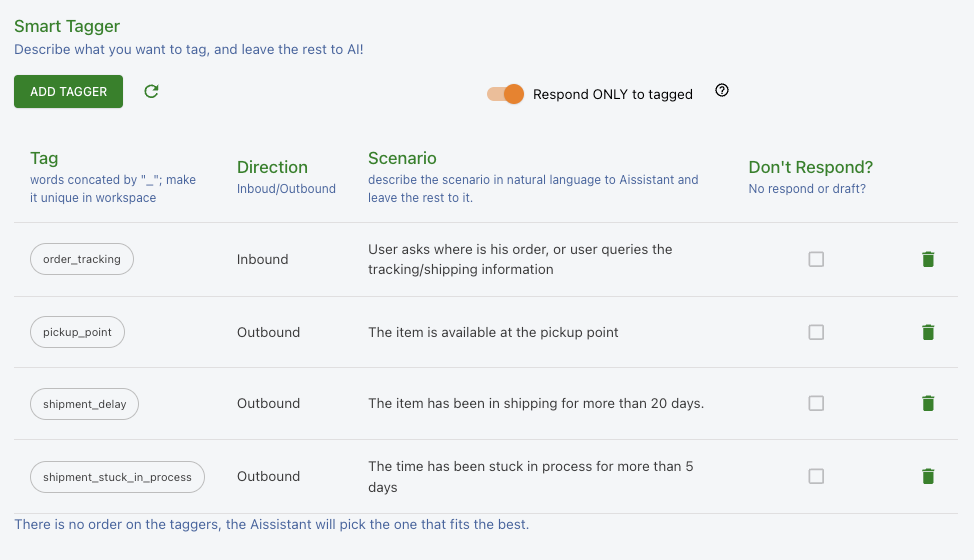
The team created an inbound tag for `order_tracking` and outbound tags for shipping exceptions.
They also enabled the setting that limits replies to recognized sub agents.
This kept the automation focused on the order tracking workflow only.
### 2. Integrations
The workflow depended on two system types:
* Shopify for customer and order data
* carrier tracking systems for shipment progress
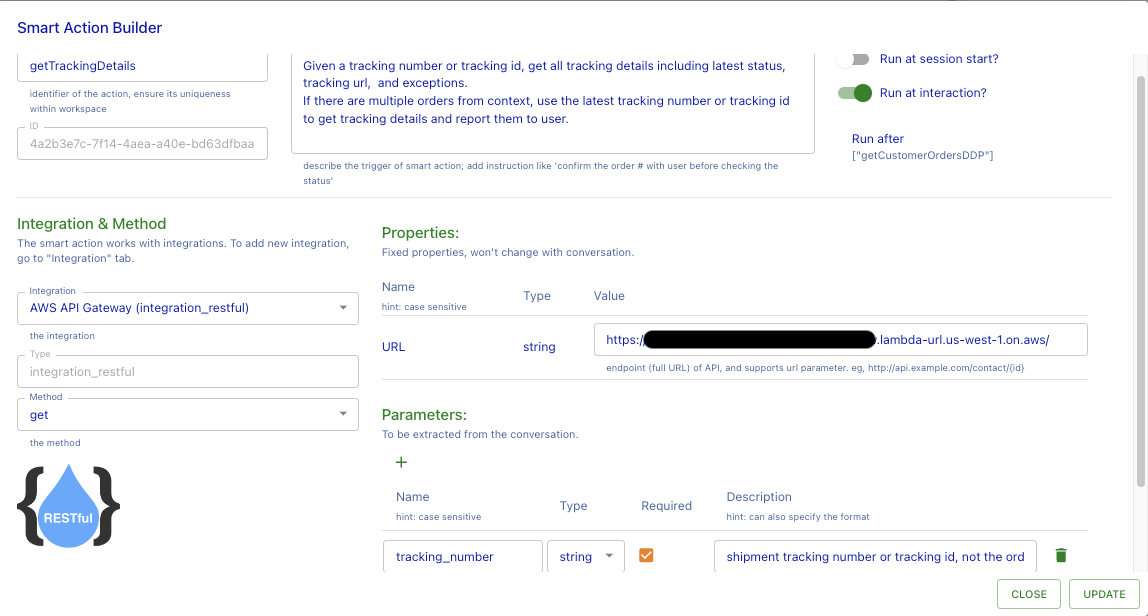
Aissist used the commerce integration to retrieve order details, including the carrier and tracking number.
For live tracking updates, the team used a lightweight AWS Lambda API that queried carrier systems directly.
### 3. Assets
The team created a Google Doc with:
* the handling steps for order tracking
* exception guidance
* a sample response format
This gave Aissist the context it needed to respond at the quality bar expected from human agents.
### Result
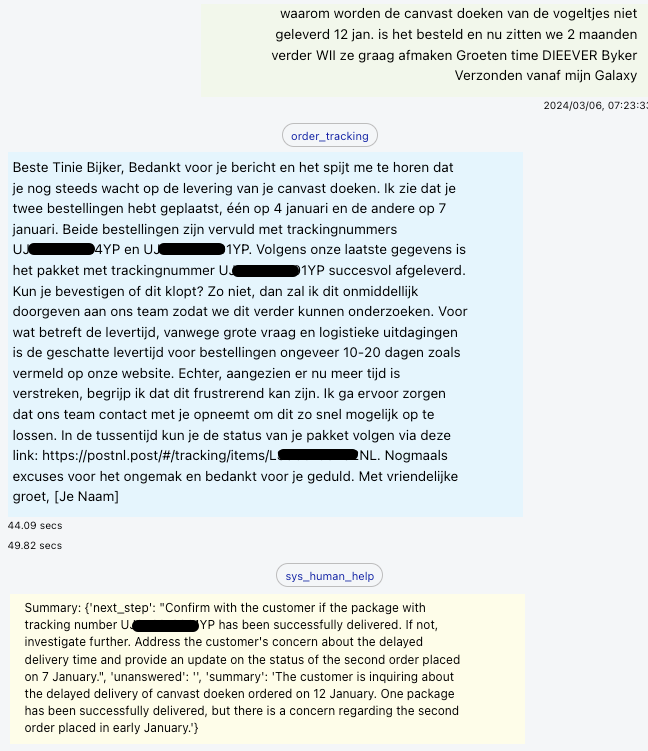
With these three pieces in place, Aissist could:
* detect order tracking conversations
* identify the correct order
* return the latest shipping update
* alert a human agent when further investigation was needed
### Why this works
This pattern works well for service workflows that are:
* repetitive
* data-driven
* easy to define with clear handoff rules
Order tracking is one example.
The same pattern also works for returns, order status, billing questions, and other operational support flows.
If you want help designing a service workflow, contact .